
The Ekklesia and the Kingdom by John P. Kelly
/I have heard many charismatic believers and ministers say, “I am more kingdom-minded than church-minded.” While this statement may sound spiritual, it often reveals a misunderstanding that can lead to imbalance and, ultimately, disconnection from God’s divine order.
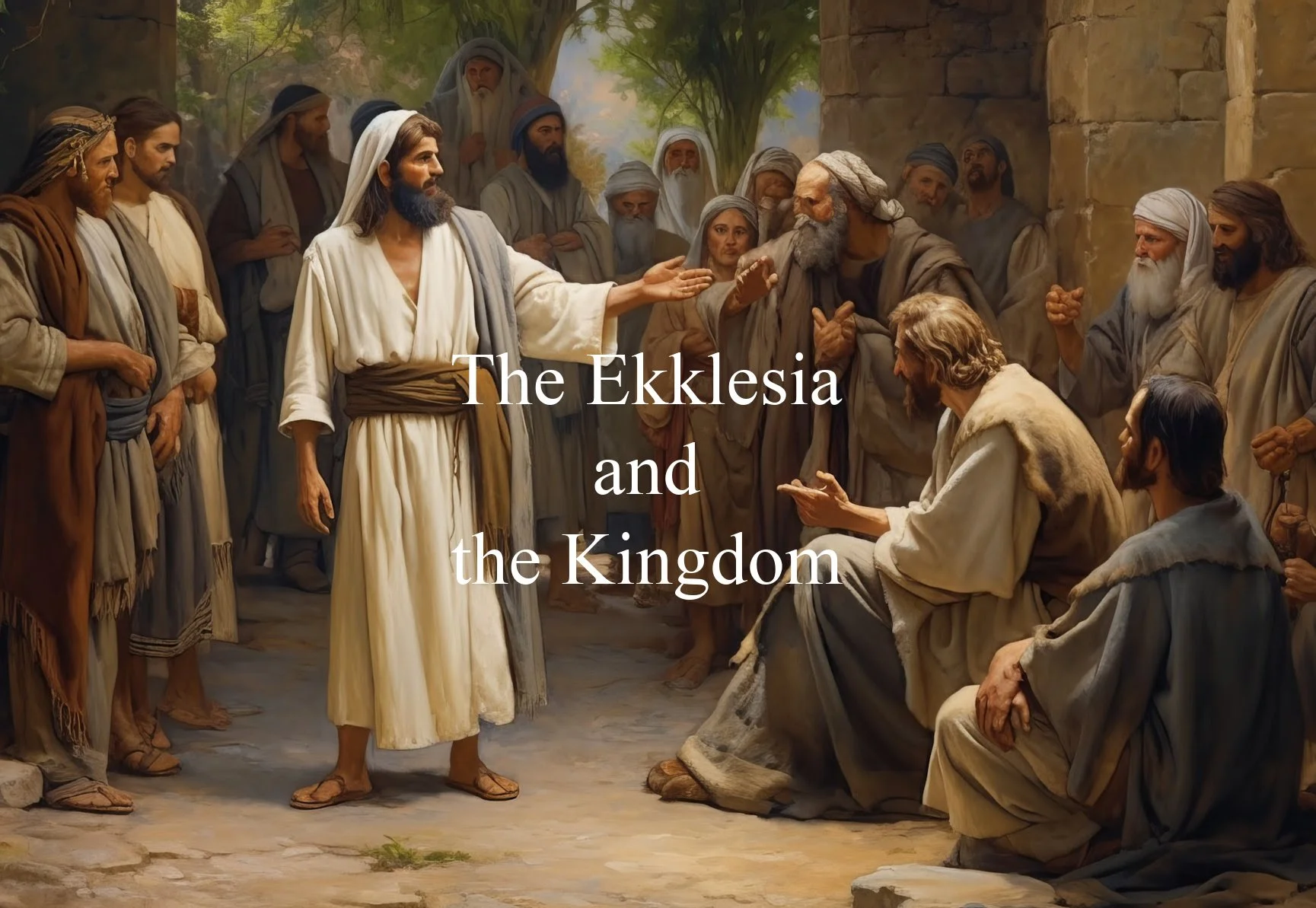
Jesus said in Luke 17:21, “For indeed, the kingdom of God is within you.” The Kingdom is not merely a concept or an external system—it is the rule and reign of Christ established within His people. However, this inward reality does not eliminate the necessity of the Church; rather, it gives life to it.
The Ekklesia (Church) and the Kingdom are not opposing realities—they are divinely connected, yet distinct.
The Ekklesia (Church) is not the fullness of the Kingdom of God, but it is the primary vessel through which the King expresses His rule in the earth.
Scripture reveals that Jesus Christ is “King of kings and Lord of lords” (Revelation 19:16). His authority extends far beyond the Church into all creation. As Ephesians 1:20–21 declares, He is seated “far above all principality and power and might and dominion, and every name that is named, not only in this age but also in that which is to come.” The Kingdom of God, therefore, is vast, eternal, and supreme—far beyond any single expression, including the Church.
Yet, it is through the Church that the wisdom, authority, and administration of that Kingdom are made visible. The Church is not the Kingdom in its entirety, but it is the covenant community of citizens who live under the King’s rule and carry His authority into the earth.
Paul writes in Ephesians 2:19, “Now therefore you are no longer strangers and foreigners, but fellow citizens with the saints and members of the household of God.” This reveals a powerful truth: we are both citizens of the Kingdom and members of the household. Kingdom speaks of dominion; household speaks of relationship and order. Apostolic leadership must hold both in proper alignment.
The apostolic mission of the Ekklesia is not to replace the Kingdom, nor to compete with it, but to advance the Kingdom of God into every sphere of society—government, business, education, family, and beyond.
The Ekklesia is the governing embassy of the Kingdom, sent to manifest the will of the King on the earth.
Therefore, we must reject the false divide between “kingdom-minded” and “church-minded.” To be truly Kingdom-minded is to honor and build what Christ is building—His Church (Matthew 16:18). Any expression of “kingdom” that disregards the Church ultimately drifts into independence and loses apostolic covering and accountability.
A mature apostolic perspective understands this:
The Kingdom is the rule of Christ over all.
The Church is the people through whom that rule is revealed and administered.
We are not called to choose between the two.
We are called to embody both.
To be Kingdom-minded without being Ekklesia aligned leads to isolation.
To be Ekklesia -focused without Kingdom vision leads to limitation.
But when the two are rightly aligned, the Church becomes a powerful expression of the Kingdom—advancing the reign of Christ in the earth with authority, order, and divine purpose.
We must be both Ekklesia (Church)-minded and Kingdom-minded—under the rule of the King of Kings, Jesus Christ.
© 2026 John P. Kelly

