
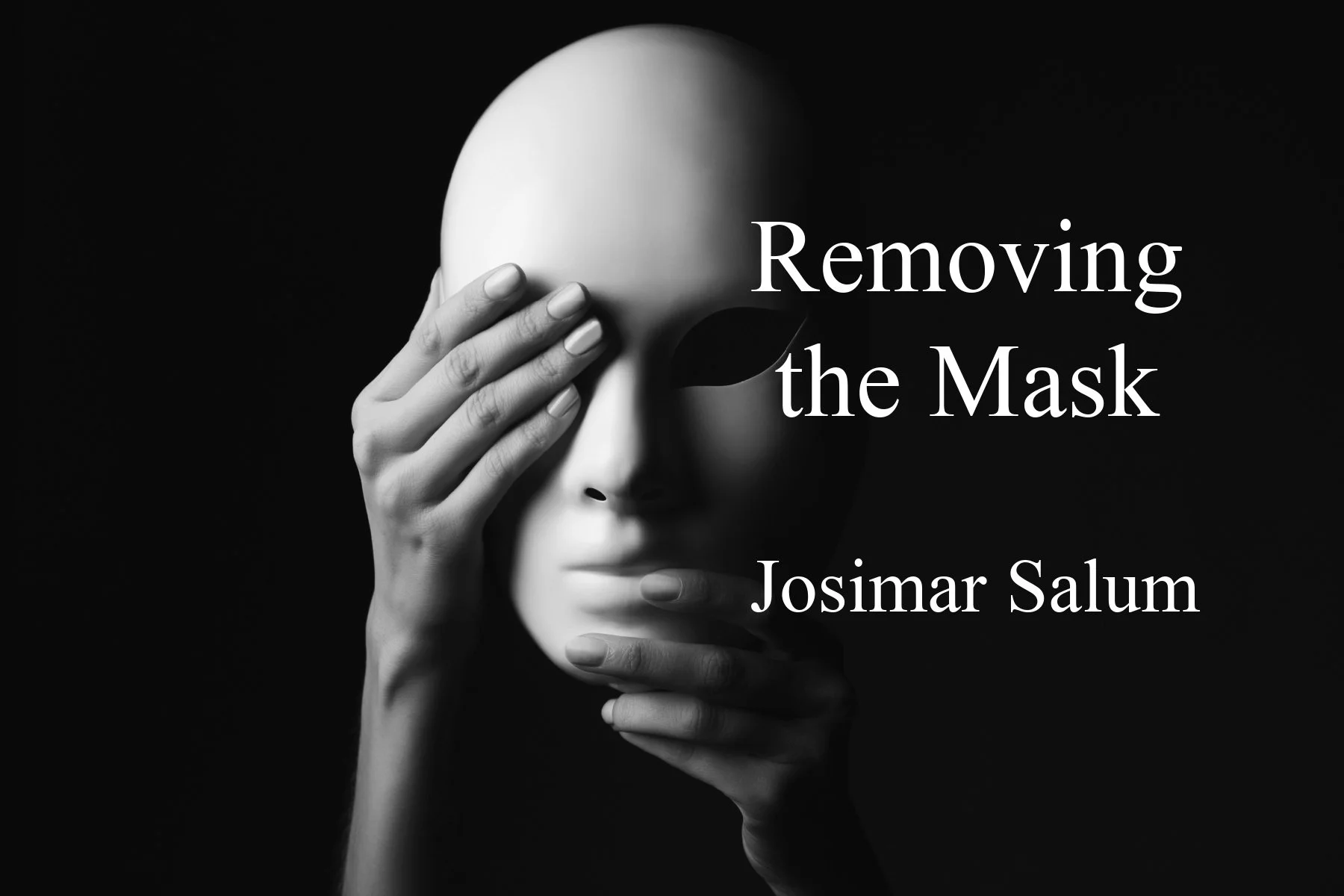
Removing the Mask, Restoring Leaders by Josimar Salum
/Removing the Mask, Returning to the Kingdom, and Restoring the Leader’s Home
There is a time to preach, but there is also a time to speak honestly.
Many pastors and leaders have spent years serving churches, preaching sermons, counseling families, organizing meetings, planting ministries, and carrying the burdens of others. They love God sincerely and desire to serve His people well. Yet, behind the pulpit, many are tired, overwhelmed, isolated, and afraid to admit that they need help.
This is not a message of condemnation. It is an invitation to truth.
We must remember that we are human. We are not gods. We are not heroes. We are men and women formed from the dust, dependent on the mercy, grace, and strength of God. The word human reminds us of humility: we come from the earth, and we live by the breath of God.
Before we are pastors, apostles, teachers, missionaries, husbands, wives, fathers, or mothers, we are human beings in need of Christ.
Ministers of the New Covenant
Paul writes: “He has made us competent to be ministers of a new covenant—not of the letter but of the Spirit; for the letter kills, but the Spirit gives life.” — 2 Corinthians 3:6
God Himself makes us competent. Ministry is not built upon our image, our titles, our ability to impress people, or our effort to keep religious expectations alive. A minister is first a servant.
The New Covenant is not the covenant of performance, fear, manipulation, or religious pressure. It is the covenant of grace, life, and transformation through Jesus Christ. We are called to preach Christ—the Redeemer, the Savior, the gracious King—not merely the traditions inherited from our fathers, denominations, or religious culture.
There are many messages being preached in churches today, but not every message is the gospel of Jesus Christ. Not every message is the gospel of the Kingdom.
The gospel of the Kingdom reveals Jesus as King of kings and Lord of lords. He is not merely the founder of a religious system. He reigns over our homes, hearts, marriages, finances, decisions, and ministries. Our lives must become an expression of worship to Him.
The Veil and the Mask
In 2 Corinthians 3, Paul speaks of Moses, who covered his face with a veil after being in the presence of God. The people saw the radiance, but eventually that radiance faded. Still, the veil remained.

For Moses, it was a veil. For many of us today, it is a mask.
We often present ourselves to people in a certain way. We want them to think we are always strong, always victorious, always full of faith, always in control. But our spouses, children, and those closest to us may see another reality.
They know when our face is no longer shining.
They know when the joy is gone.
They know when our words in public do not match our behavior at home.
The danger is not that leaders have weaknesses. Every human being has weaknesses. The danger is trying to hide them behind a religious mask. God sees everything clearly. Nothing is hidden before Him. But we often keep wearing the mask because we fear people’s expectations.
The mask may protect an image, but it can destroy a family.
Many leaders have tried to save everyone else while their own homes were suffering. Some have invested deeply in the children of the world while losing connection with their own sons and daughters. Some have preached about love while becoming emotionally unavailable to their wives. Some have taught others about faith while silently fighting despair, depression, exhaustion, shame, and loneliness.
The answer is not to pretend. The answer is to come honestly before the Lord.
We need to say: “Lord, I have done wrong. I need help. I cannot become like You by my own strength. Remove my mask. Transform my life.”
The First Responsibility of a Leader
The first responsibility of a leader is not the ministry platform. It is not the meeting schedule, the building, the budget, or the public reputation of the church.
The first responsibility of a leader is his or her family.
The Bible calls us to speak and act as those who will be judged by the law of liberty: “So speak and so act as those who are to be judged under the law of liberty.” — James 2:12
There is a great difference between saying that family comes first and truly living that way.
A sustainable ministry cannot be built by sacrificing a marriage, neglecting children, ignoring emotional health, or treating the home as less important than the church program. No ministry success can compensate for a home that has been wounded by neglect.
Some leaders are not intentionally abandoning their families. They simply do not know how to establish healthy boundaries. They have been taught, directly or indirectly, that they must do everything: answer every call, solve every crisis, attend every meeting, visit every person, and carry every burden.
But this is not the biblical model.
The pastor is not called to do all the work of the ministry. According to Ephesians 4, leaders equip the saints for the work of ministry. The Body of Christ must function as a body. When the pastor tries to carry everything alone, the people remain dependent, the family suffers, and the leader eventually breaks down.
We must ask: What belongs to the pastor? What belongs to the family? What belongs to the congregation? What belongs to the Body of Christ?
If people do not take responsibility, we should not always rush to do it for them. We must teach, equip, release, and trust them to grow.
From Church-Centered Living to Kingdom-Centered Living
We were not called merely to go to church. We are the Church.
The Church is the living Body of Christ. It is not simply a building, a weekly schedule, or a collection of religious events. The Greek word ekklesia points to a people called together under the authority of a King.
Jesus is our King. We are ambassadors of His Kingdom.
Therefore, the center of our lives cannot be a church building, a personality, a denomination, or even a ministry program. The center is Jesus Christ and His throne.
The Book of Revelation does not show people gathered around an altar or a religious institution. It shows people around the throne. Around that throne, Christ is worshiped forever as King of kings and Lord of lords.
When a church becomes the center of everything, people may be pressured to attend endless programs, feel guilty when they cannot come, and believe that their spiritual value is measured by their presence in meetings. But the Kingdom is larger than a schedule. It reaches homes, workplaces, neighborhoods, nations, marriages, and daily life.
We must build communities that form disciples, strengthen families, serve people, and release believers into their calling—not communities that make everyone dependent on the pastor.
Grace Instead of Manipulation
The gospel is not a tool for controlling people.
We must be careful not to use guilt, fear, or financial pressure in the name of God. Giving, tithing, offerings, generosity, and sacrifice have a place in the life of faith. But they must be responses to grace, not transactions to purchase God’s favor.
We do not give in order to be blessed. We give because God has already blessed us in Christ.
We do not serve in order to earn His love. We serve because we have received His love.
We do not carry religious burdens to prove our spirituality. We walk with Jesus because He has invited us into His life.
The true gospel does not enslave people. It gives life.
The Need for Help, Healing, and Spiritual Fathers
Leaders need help. This should not be a shameful confession.
There are seasons when a pastor may experience deep emotional pain, exhaustion, despair, or even thoughts of giving up. Such struggles do not make a person less human; they reveal the urgent need for support, care, wise counsel, and healing.
No one should walk alone through those seasons.
Leaders need trusted friends, counselors, mentors, and spiritual fathers who can speak truth with love. A spiritual father does not exploit his children, demand what they have, or use their loyalty for personal benefit. In Scripture, fathers give to their children. They protect, guide, encourage, correct, and strengthen them.
We must ask God to show us whom we can trust—men and women of maturity, wisdom, integrity, and genuine love. We need relationships where we can speak openly without being destroyed by judgment.
To receive help is not weakness. It is wisdom.
A Call to Transformation
Paul says: “And we all, with unveiled face, beholding the glory of the Lord, are being transformed into the same image from glory to glory. This is from the Lord who is the Spirit.” — 2 Corinthians 3:18
The goal is not to maintain a shining image. The goal is to be transformed into the likeness of Christ.
This transformation happens when the veil is removed. It happens when we stop pretending, return to the true gospel, seek help when necessary, honor our families, establish healthy boundaries, and submit our lives again to Jesus the King.
The Lord is calling leaders to a sincere, human, and biblical conversation.
A conversation about what we have done wrong.
A conversation about the masks we have worn.
A conversation about our homes, our children, our marriages, our health, and our need for help.
A conversation about moving from religious systems to the living ecclesia of God.
May the Lord give us courage to remove the mask, humility to receive help, wisdom to restore our homes, and grace to serve His Kingdom faithfully.
Jesus, teach us to live what we preach. Transform us into Your likeness. Help us to love our families, equip Your people, and walk in the freedom of Your New Covenant.
Amen.
© 2026 Josimar Salum

