
Navigating 21st-Century Challenges by Robin Michael Beach
/The Church in the twenty-first century stands at a unique crossroads. We are navigating an era characterized by rapid cultural shifts, ideological challenges, and a profound hunger for authentic spiritual authority.

In the midst of these complexities, the Apostolic movement is called not merely to adapt to the times but to anchor itself deeply in the historic orthodoxy established by the Apostles of the Lamb and the early Church fathers. It is from this solid foundation that we can confidently explore expanded revelation and innovative thought for effective application today.
The mandate of the International Coalition of Apostolic Leaders (ICAL) is to connect the wisdom and resources of apostolic Christian leaders, empowering each member to function more strategically in advancing the Kingdom of God. To fulfill this mandate, we must understand that true apostolic ministry is intrinsically linked to both historical continuity and prophetic foresight.
The Bedrock of Historic Orthodoxy
The early Church fathers understood the vital necessity of apostolic oversight. They recognized that the faith handed down by the original Apostles was not merely a collection of doctrines, but a living, breathing reality that required safeguarding and faithful transmission. Apostolic succession, in its truest spiritual sense, is about the preservation of this foundational truth and the continuation of the apostolic mission—teaching, preaching, and healing.
When we look at the New Testament model, we see a Church that was dynamic and adaptable yet firmly rooted in the teachings of Christ. The Gospel of John vividly illustrates this tension between divine truth and human perception.
In the account of the man born blind (John 9), Yeshua declares, "While I am in the world, I am the light of the world.” He challenges the spiritual blindness of the religious establishment, demonstrating that true sight—spiritual revelation and understanding—comes only through obedient faith in Him.
This narrative serves as a powerful metaphor for our current apostolic calling. Like the Pharisees of old, there are those today who claim to see clearly while remaining blind to the move of the Spirit. Our role as apostolic leaders is to be bearers of that Light, illuminating the darkness of ignorance, confusion, and cultural decay with the uncompromised truth of the Gospel.
Navigating 21st-Century Challenges
The challenges facing the modern Church are multifaceted. We are witnessing the aggressive spread of competing ideologies and worldviews that seek to dominate the cultural landscape. As highlighted in recent apostolic discourse, the growth of alternative religious and political movements presents a profound spiritual challenge for the Ekklesia.
However, our response must not be driven by fear or mere reactionary defense. Instead, we are called to an offensive strategy rooted in Kingdom principles. The apostolic movement must rise to the occasion by equipping believers to discern the times and respond faithfully. This requires a robust theology that does not shy away from the hard questions but addresses them with the wisdom of God.
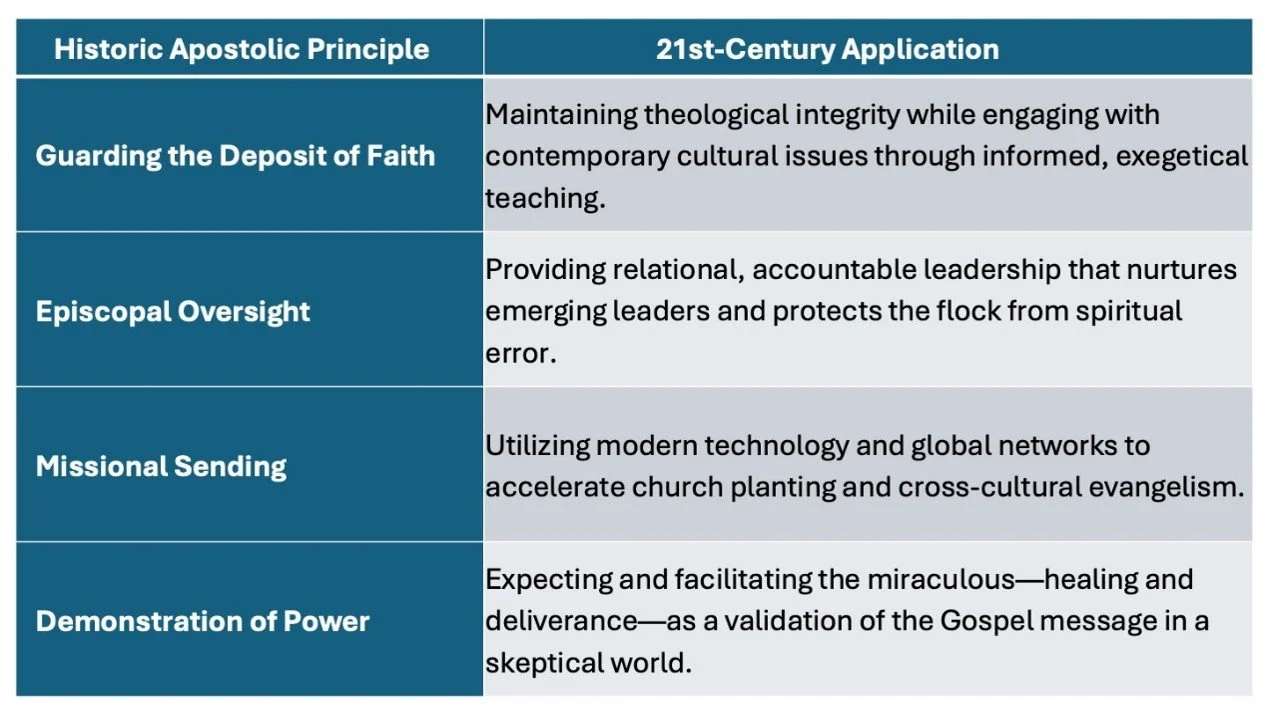
Expanding Revelation within Orthodox Boundaries
Maintaining a degree of Orthodoxy does not mean we are bound by dead traditionalism. The Holy Spirit is still speaking to the Churches. Expanded revelation is the process by which the timeless truths of Scripture are applied with fresh insight to contemporary situations. It is the prophetic edge of the apostolic ministry.
As we face an increasingly secularized society, our innovative thought must be directed toward effective Kingdom manifestation.
How do we build genuine relationships with local communities?
How do we effectively disciple nations
These are the questions that require apostolic ingenuity. We must foster environments—whether in our local congregations or through international networks like BridgeWay Global Fellowship—where leaders are trained not just in theology, but in practical, transformative leadership.
Yeshua warned His disciples, "Night is coming, when no one can work". This conveys a sense of urgency. The time to build, to strengthen the brethren, and to proclaim the Gospel with boldness is now.
Conclusion
The strength of the ICAL-USA network lies in our collective commitment to the apostolic mandate. By honoring the faith established by the early Church fathers and remaining open to the dynamic leading of the Holy Spirit, we position ourselves to be effective agents of change in the 21st century.
Let us continue to build upon the ancient foundations with the present reality of power, love, and a sound mind, advancing the Kingdom of God until the earth is filled with the knowledge of His glory.
T H E E N D
©2026 Robin Michael Beach

